
Contents
- Donate, sell, upcycle or recycle: which comes first?
- Where can you donate soft toys near you?
- What condition does a soft toy need to be in?
- Can you sell old soft toys?
- How can you upcycle an old soft toy?
- Can you recycle soft toys, and which bin do they go in?
- How do you help a child let go of soft toys?
- Frequently asked questions about donating and recycling soft toys
- Sources
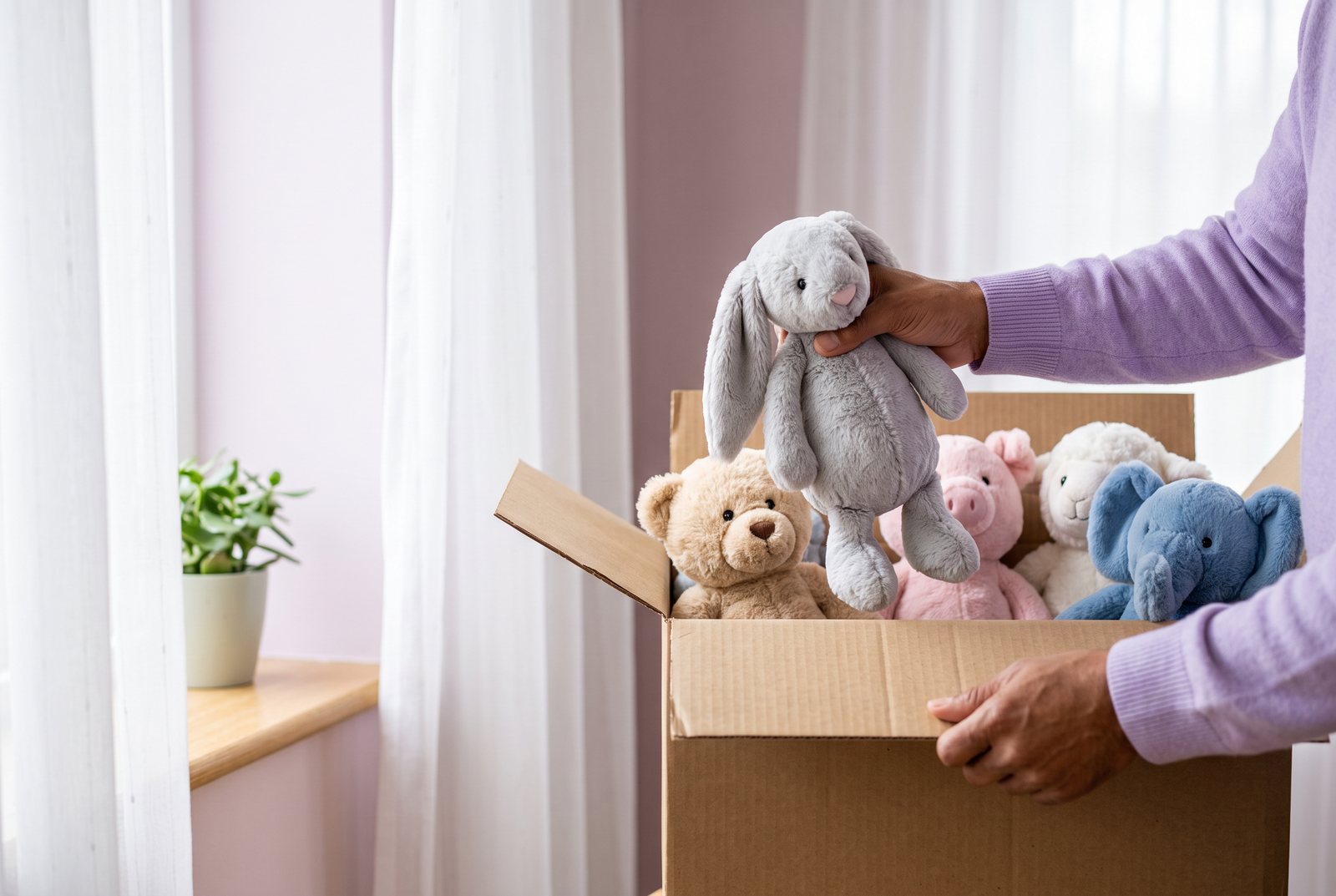
Where to donate soft toys? Start with friends and local community groups, charity shops that accept toys with their safety label, toy banks and family support charities, and nurseries or playgroups that ask for them. Worn-out ones can often go in a textile bank. Wash them first and ring ahead: every place has its own rules.
A soft toy nobody cuddles in your home can still be loved somewhere else for years. And when it really is finished, there are better places for it than the bin. Here is how to choose, in the right order.
Donate, sell, upcycle or recycle: which comes first?
Start with whatever keeps the toy in use the longest. A review of 41 studies on textiles found strong support for the idea that reuse and recycling both cut environmental impact compared with incineration or landfill, and that reuse does better than recycling (Sandin and Peters, 2018). Reuse is still the least studied of the two: only 41% of those studies looked at it, against 85% for recycling. The authors add a caveat worth remembering: the benefit shrinks if people drive long distances to drop off a single bag.
From the best option to the last
Toys with electronics add up fast. In research published in September 2023, Material Focus, the not-for-profit behind the Recycle Your Electricals campaign, estimated that 7.5 million unused electrical children’s toys were sitting in UK cupboards, and that 3 million had gone to landfill in the previous six months. Musical teddies and night-light soft toys are part of that pile.
Where can you donate soft toys near you?
Not every organisation takes everything. The table sums up what each usually accepts, and what to ask before you set off with a full bag.
| Who to give to | What is usually accepted | What to check first |
|---|---|---|
| Friends, neighbours, local giveaway groups | Any clean soft toy in good condition | That someone really wants it |
| Charity shops | Clean toys in good condition, often only with the CE or UKCA label still attached | The shop’s own list of items it cannot accept |
| Toy banks, baby banks, family support charities | Toys in very good condition for local families | Current needs: some only take new toys |
| Christmas toy appeals | Mostly new, unwrapped gifts | Closing dates, usually early December |
| Nurseries, playgroups, schools, toy libraries | Depends on their needs, often very few soft toys | Their hygiene rules, sometimes new only |
| Children’s hospitals and hospices | After agreement, almost always new toys | The ward or the hospital charity that handles gifts |
A two-minute phone call saves you a wasted trip. A playgroup that has just been given a hundred teddies will not want one more, while a family support charity three streets away may be short of them for its December parcels.
Do charity shops take soft toys?
Many do, but not all, and rarely without conditions. Several large charity shop chains list soft toys without a CE or UKCA mark among the items they cannot accept, because a toy sold second-hand still has to meet toy safety rules. Others refuse used soft toys altogether. So keep the sewn-in label if it is still there, and look for the “items we can’t accept” page of the charity before you go, or ask at the till. Policies can differ from one branch to the next.
What condition does a soft toy need to be in?
One simple test: would you give it to a child you love? Clean, complete, no smell, nothing loose.
Before it goes in the donation bag
Ready to go, after a wash
- Seams closed, no stuffing coming out.
- Eyes and nose firmly fixed, nothing you can pull off with two fingers.
- Fur clean and dry right through, no musty smell.
- Safety and care label still attached and readable.
Not ready, or not without a repair
- Beads or pellets escaping from a seam.
- An eye hanging by a thread, a loose button.
- Mould spots, or a smell that comes back after washing.
- A battery box that leaks or will not open.
Wash each toy according to its care label before you donate it, and let it dry right to the core: our guide on how to wash a stuffed toy gives the right method for each type. This is not fussiness. In one paediatric intensive care unit, 85% of the toys sampled, whether brought in by families or supplied by the hospital, carried live bacteria (Fleming and Randle, 2006). An organisation that passes toys on to vulnerable children has every reason to be careful.
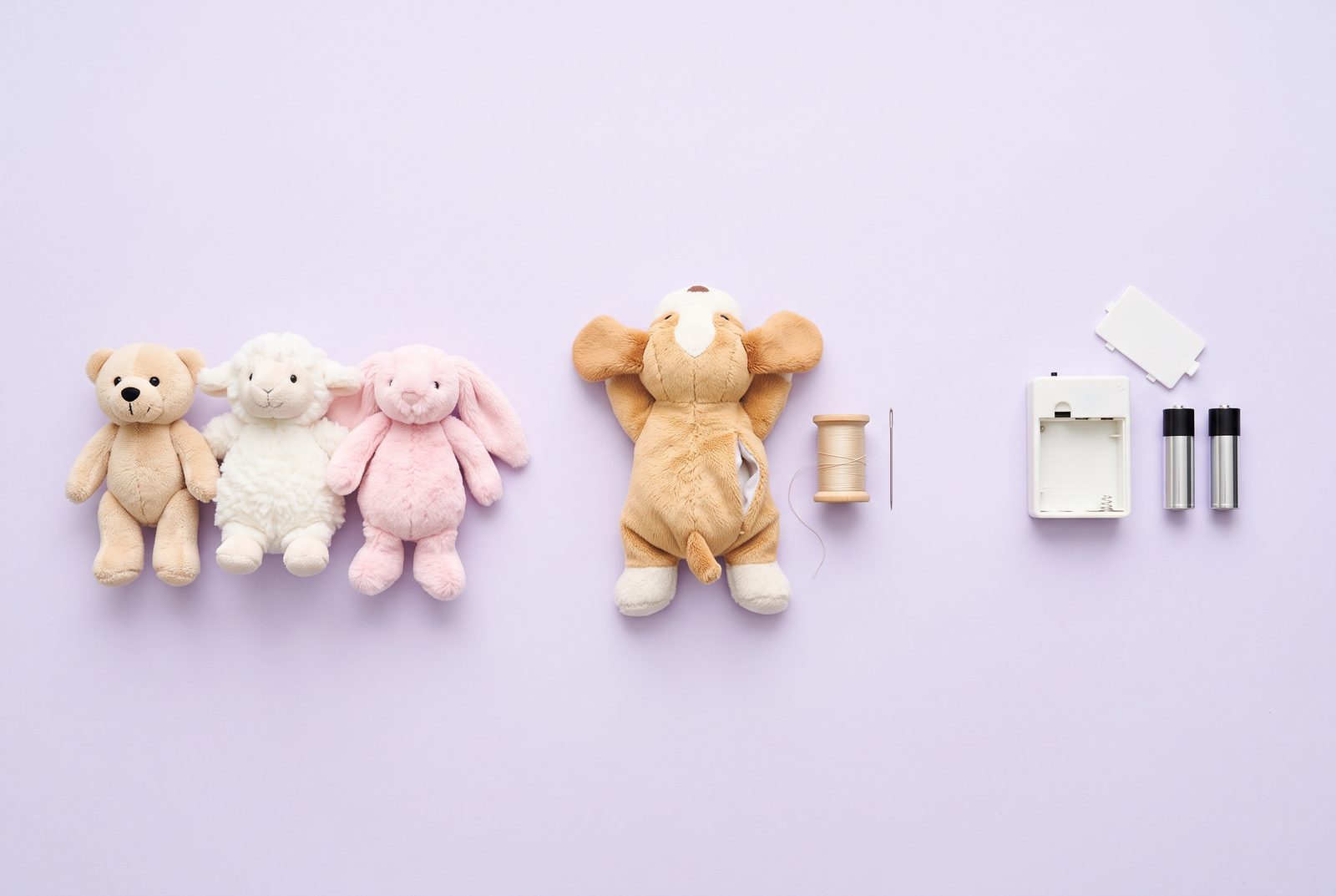
An open seam or a wobbly eye takes about 10 minutes to fix with a needle and thread: our tips on how to repair a stuffed toy show the stitches that hold. Take the batteries out of musical or light-up toys and say so on the bag.
Pack the toys in a clean cardboard box or a fabric bag rather than a black bin bag, which can easily be mistaken for rubbish on a doorstep.
Can you sell old soft toys?
Yes, and selling is still reuse. A car boot sale remains the easiest way to clear a box of everyday soft toys: priced low, they tend to go by mid-morning to parents and grandparents. Nearly-new sales run by parents’ groups and school fairs often take recent toys in perfect condition. Selling online works better for bundles than for single toys, once you count the cost of postage.
Set aside anything that may be worth more: an old mohair teddy, a toy from before the 1970s with a maker’s button or label, a collector’s piece. Their value depends on condition and history. Never wash them in water before an expert has seen them, and follow our method to clean an old teddy bear without damaging it.
How can you upcycle an old soft toy?
For the ones with too many memories to leave, or too much wear to give away, a few ideas that need very little kit.
As a keepsake, without cutting it up
A small soft toy can be mounted in a deep box frame on coloured card, held with a few stitches rather than glue, so it can come out again later. A very small one becomes a keyring or a school bag charm with a ring stitched into a strong seam. Several toys from the same childhood can also stay together on a shelf in a grown-up bedroom.
With a bit of sewing
If you sew, the fur of a worn toy makes a cushion cover or a square in a memory quilt, stitched together with pieces of baby clothes. Clean, dry stuffing can refill a flat cushion. A damaged toy can even be patched with fabric from another one.
And if your child wants to keep everything, keep it, but properly: our ideas on how to store stuffed animals explain how to keep them clean and protected for years.
Can you recycle soft toys, and which bin do they go in?
Not in your kerbside recycling bin, which is for packaging, paper, cans and glass. Soft toys belong with textiles. Many clothing and textile banks accept them, even worn, because what cannot be resold is sorted for recycling. In Scotland, Zero Waste Scotland states that soft cuddly toys are accepted at textile banks. Elsewhere, rules depend on the operator: read the sign on the bank, or check your council’s website, and use the Recycle Now locator to find your nearest bank or household waste recycling centre.
Put the toys in a tied bag so they stay dry, push the bag right inside the bank, and never leave it on the ground next to a full one, which counts as fly-tipping.
of the textile studies reviewed by Sandin and Peters looked at recycling, and only 41% at reuse, although reuse came out as the better option.
Sandin and Peters, 2018, Journal of Cleaner Production
What about soft toys with batteries?
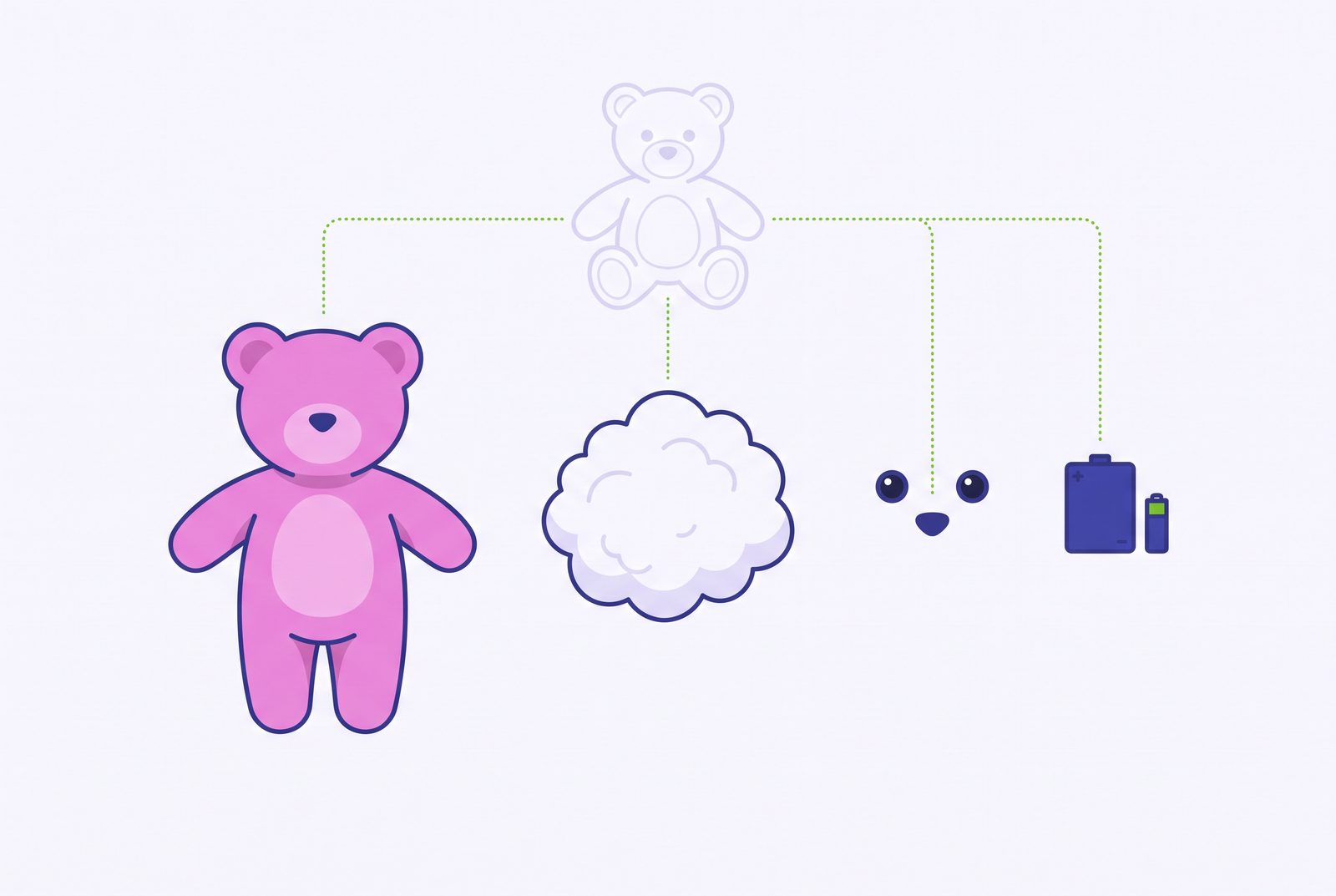
A musical teddy, a night-light toy or a breathing soft toy contains a small electrical device. Take the batteries out and drop them in a battery recycling bin: shops that sell batteries usually have one. Never put batteries in a household bin or recycling bin, where they can start fires in bin lorries and sorting plants. If the sound box comes out, the soft toy itself can go the textile route and the box goes with small electricals. If it cannot be removed, the whole toy counts as an electrical item: take it to your household waste recycling centre, or to one of the drop-off points listed by Recycle Your Electricals.
How do you help a child let go of soft toys?
Never sort them while your child is out. A toy that vanishes during a school day leaves a longer memory than the space you gained. To a young child, a comfort object has no equivalent: in one experiment, young children were much less willing to accept a perfect copy of their attachment object than a copy of a favourite toy (Hood and Bloom, 2008). The comforter stays out of the discussion, whatever state it is in.
For the rest, let your child choose, and tell them where the toys are going: to another child, to a charity, to a second life. If they want to, let them hand over the bag themselves, so the gesture becomes theirs. When they hesitate over one, put it in a “maybe” box for 3 or 4 weeks. If nobody asks for it, it can go.
Many families end up keeping one special toy per child for the long term. When a new favourite is wanted, a classic from our teddy bears tends to become the one that stays.
Frequently asked questions about donating and recycling soft toys
Should you throw away old soft toys?
Only as a last resort. A clean toy in good condition can be passed on, a worn one can be turned into a keepsake, and many textile banks take soft toys that are past reuse if their sign allows it. Take out any batteries first: they never belong in a household bin.
Can you donate soft toys to a children’s hospital?
Sometimes, but never without asking first. Ring the ward or the hospital charity: infection control rules mean many only accept new toys, still in their packaging, and some ask for gifts at set times of year, often before Christmas. Second-hand soft toys are usually refused, however clean they look.
Do animal rescues take old soft toys?
Some rescues use them as toys for dogs, others refuse them, so phone before you drive over. Cut off plastic eyes and buttons, remove any bag of beads, and never give a toy with a battery box: a dog can swallow small parts. A toy that is already torn will be shredded in minutes.
How can you check that a toy appeal is a real charity?
Look up its name or number on the public register of charities: the Charity Commission for England and Wales, the Scottish Charity Regulator or the Charity Commission for Northern Ireland. A genuine appeal also tells you clearly what it accepts, where the toys go and when it collects.
Sources
Fleming K., Randle J. (2006). Toys, friend or foe? A study of infection risk in a paediatric intensive care unit. Paediatric Nursing, 18(4), 14-18. DOI: 10.7748/paed.18.4.14.s15
Hood B., Bloom P. (2008). Children prefer certain individuals over perfect duplicates. Cognition, 106(1), 455-462. DOI: 10.1016/j.cognition.2007.01.012
Sandin G., Peters G.M. (2018). Environmental impact of textile reuse and recycling, a review. Journal of Cleaner Production, 184, 353-365. DOI: 10.1016/j.jclepro.2018.02.266